How Scrap Metal Prices Affect Your Junk Car Value in Florida (2026)
· MiamiJunkCars Editorial Team
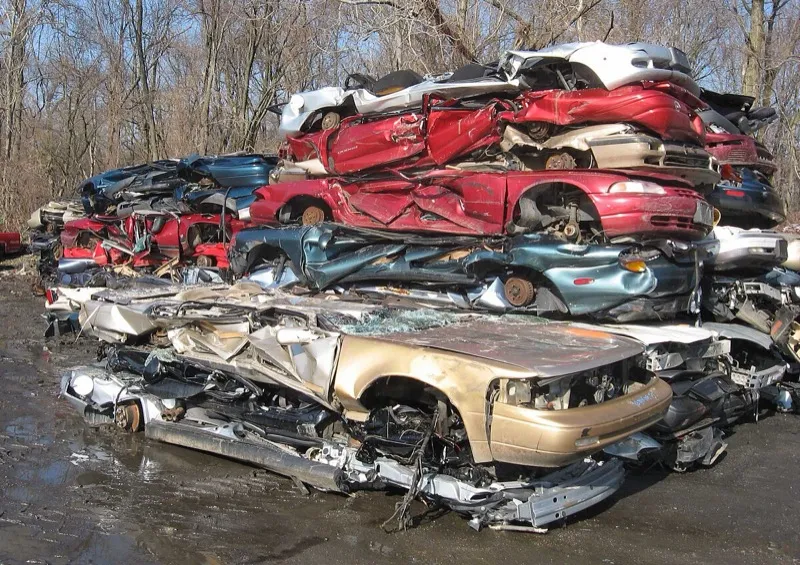
What Metals Are in Your Junk Car
A junk car is not just a pile of rust — it is a collection of recyclable metals, each traded on global commodity markets that fluctuate daily. Understanding what your car is made of helps you understand why buyers make the offers they do and what drives those numbers up or down over time.
Every vehicle is a composite of several distinct metals, each with its own market price and percentage of total vehicle weight:
- Steel — The single largest component, making up roughly 65% of a vehicle's total weight. This includes the body panels, frame, subframe, doors, hood, roof, and structural components. Steel is a ferrous metal (iron-based) and trades at lower per-pound values than non-ferrous metals, but its sheer volume means it forms the foundation of every junk car offer.
- Aluminum — Modern vehicles use aluminum increasingly in engine blocks, cylinder heads, transmission housings, wheels, and — on newer models — entire body panels. Aluminum is a non-ferrous metal worth significantly more per pound than steel. A vehicle with aluminum wheels and an aluminum engine block will bring a notably higher offer than a comparable all-steel model.
- Copper — Found throughout the vehicle in wiring harnesses, the radiator, alternator, starter motor, and AC condenser. Copper represents a smaller percentage of vehicle weight but commands premium prices as a non-ferrous metal. A complete copper radiator alone can be worth $15–$40 at current Florida scrap yard rates.
- Platinum Group Metals (PGMs) — Platinum, palladium, and rhodium are found in the catalytic converter. These precious metals are present in very small quantities by weight but are extremely valuable. A single catalytic converter can represent 20–50% of a vehicle's total scrap value depending on the make, model, and year.
- Lead — Present in the 12-volt battery and in wheel balance weights. Batteries are typically removed before scrapping and carry their own recycling value (usually $5–$12 per battery). Lead wheel weights are being phased out, but many older vehicles still have them.
The relative value of these metals shifts constantly with global commodity prices — which is why the cash offer on your junk car today might be meaningfully different from what a neighbor received six months ago for an identical vehicle.
Current Scrap Metal Prices in Florida (2026)
Scrap metal prices are quoted per pound or per hundredweight (CWT = 100 lbs) and change frequently based on global supply, demand, and exchange rate fluctuations. The following figures reflect approximate Florida market rates as of early 2026 — treat them as a reference range rather than a guaranteed price, and check resources like iScrap App or ScrapMonster for real-time local quotes.
| Metal | Form / Grade | Approx. FL Price (2026) | Where in Your Car |
|---|---|---|---|
| Steel (Ferrous) | #1 Prepared | ~$10.70 / CWT | Frame, body panels, doors, roof |
| Steel (Ferrous) | #2 Unprepared | ~$9.35 / CWT | Mixed / unprocessed body steel |
| Steel (Ferrous) | Shred / Tin | ~$5.25 / CWT | Shredded vehicle remnants |
| Aluminum | Cast (engine, wheels) | ~$0.35–$0.50 / lb | Engine block, wheels, transmission |
| Copper | #2 Bare Bright | ~$3.00–$3.40 / lb | Wiring, radiator, alternator |
| Palladium | Catalytic converter | ~$900–$1,100 / troy oz | Catalytic converter substrate |
| Platinum | Catalytic converter | ~$900–$1,000 / troy oz | Catalytic converter substrate |
| Rhodium | Catalytic converter | ~$4,000–$5,500 / troy oz | Catalytic converter substrate |
A note on the math: the PGM content in a typical catalytic converter is measured in grams, not troy ounces. A standard passenger car converter might contain 2–7 grams of PGMs combined. But at rhodium prices above $4,000 per troy ounce (31.1 grams), even a small concentration of rhodium adds significant dollar value. That is why converters on trucks, SUVs, and performance vehicles — which use more metal to meet stricter emissions standards — can individually be worth $300–$900 or more in scrap.
Key takeaway for sellers: The steel in your car sets the floor price. The aluminum, copper, and catalytic converter metals are what push the offer higher — and why a 2010 Toyota Tundra brings significantly more than a 2005 Hyundai Accent of the same mileage.
How Scrap Yards Calculate Your Offer
Understanding how a licensed junk car buyer arrives at their cash offer demystifies the process and helps you evaluate whether the number you receive is fair. The calculation is not arbitrary — it follows a consistent logic tied to global commodity markets.
1. Global commodity benchmarks. Scrap yards track prices on the London Metal Exchange (LME) for aluminum, copper, and other non-ferrous metals, and use CME Group (Chicago Mercantile Exchange) benchmarks for ferrous metals and precious metals. These exchanges set the "spot price" — the global baseline that trickles down to every scrap yard in Miami-Dade. The U.S. copper scrap market has increasingly shifted from COMEX to LME pricing due to volatility concerns, so the international benchmark is now more directly relevant than ever.
2. Processing and transportation costs. The spot price is not what you receive — the yard has to transport the vehicle, process it (shred, separate, drain fluids), and sell the resulting metal to a mill or export broker. These operating costs come out of the gross commodity value. A yard paying $0.35/lb for aluminum has already baked in their margin on top of what the mill will pay them.
3. Vehicle weight and metal composition. A licensed buyer estimates the total recoverable metal based on the vehicle's weight and known composition ratios. A 4,000-lb sedan contains roughly 2,600 lbs of steel, 400 lbs of aluminum (if modern), and smaller quantities of copper, lead, and PGMs. They run those numbers against current spot prices to arrive at a gross recoverable value — then subtract operating costs to produce your offer.
4. Parts value. If your car has salvageable components with strong aftermarket demand — a good engine, transmission, doors in clean condition, or desirable wheels — a buyer who also operates a salvage yard can offer more than a pure metal buyer. This is why offers vary between buyers: a pure scrap buyer sees only metal value, while a buyer with a parts operation can often pay more.
5. Local supply and demand. If a local scrap yard is overstocked with a certain metal type, they may offer less. If they have a large export shipment leaving PortMiami and need volume quickly, they may offer more. This local dynamic is real and is one reason why getting multiple quotes in Miami on the same day can produce noticeably different numbers.
Catalytic Converter Metals: Platinum, Palladium, Rhodium
The catalytic converter is the most misunderstood part of a junk car's value equation. It sits underneath the car, looks unremarkable, and weighs only a few pounds — but it contains trace amounts of some of the most valuable metals on earth.
Inside every catalytic converter is a honeycomb-structured ceramic or metallic substrate coated with a wash of platinum group metals (PGMs). These metals act as chemical catalysts, converting toxic exhaust gases (carbon monoxide, hydrocarbons, nitrogen oxides) into less harmful emissions. The three PGMs used are:
- Platinum (Pt) — Used in diesel catalytic converters primarily, and in smaller quantities in gasoline converters alongside palladium. Platinum prices in 2026 are in the $900–$1,000/troy oz range.
- Palladium (Pd) — The primary metal in modern three-way gasoline catalytic converters. Palladium prices surged dramatically between 2018 and 2021, briefly touching $2,800/troy oz, driven by stricter global emissions standards requiring more PGM content per converter. Prices have moderated since then but remain elevated at $900–$1,100/troy oz in early 2026.
- Rhodium (Rh) — The rarest and most price-volatile of the three. Rhodium hit a peak of approximately $29,000/troy oz in 2021 before collapsing, and trades at roughly $4,000–$5,500/troy oz in 2026. Even small rhodium concentrations significantly boost converter value.
The amount of PGMs a converter contains varies by vehicle type, engine size, and model year. Larger engines and newer emissions standards require more catalyst loading. As a result, the most valuable converters come from large-displacement trucks and SUVs, and from hybrid vehicles like the Toyota Prius — which use converters designed to function efficiently across wide temperature ranges and thus require more precious metal content.
Vehicles with High-Value Catalytic Converters
Large trucks and SUVs (Ram 2500, Ford F-250, Chevy Silverado 2500) consistently yield among the highest converter values due to their engine displacement. The Toyota Prius is among the most-targeted vehicles for converter theft precisely because its hybrid system preserves the catalyst in near-new condition. Ford Mustangs, Lamborghini and Ferrari models (when present), and late-model Honda Accords also carry above-average converter values. For accurate figures, check a converter lookup database using your vehicle's VIN before selling.
What this means for your sale: If your vehicle's catalytic converter is intact and the car is a large truck, hybrid, or recent-model SUV, make sure any buyer explicitly accounts for the converter's PGM content in their offer. Do not sell to a buyer who simply quotes "scrap weight" without acknowledging the converter separately — that is likely leaving money on the table.
Florida HB 479: Catalytic Converter Theft Law (2023)
Florida's catalytic converter theft epidemic prompted the state legislature to pass HB 479, the Catalytic Converter Antitheft Act, signed into law in 2023. The law created Florida Statute 538.235 and significantly changed the legal landscape around converter sales and purchases in the state. If you are selling a junk car in Florida, understanding this law protects you and ensures your transaction is compliant.
Key provisions of HB 479:
- Restricted purchases: It is illegal to knowingly purchase a detached catalytic converter from any person unless the buyer is a registered secondary metals recycler under Florida law. This means private individuals and unlicensed "cash for converters" operations are prohibited from buying standalone converters.
- Documentation requirements: Registered recyclers who purchase detached converters must collect and retain specific documentation, including the seller's name, address, and government-issued ID; vehicle information (make, model, VIN, license plate) for the vehicle from which the converter was removed; and proof that the seller is the registered owner or an authorized agent. Records must be maintained for a minimum period and are subject to inspection.
- Prohibited acts: Possession, purchase, sale, or installation of a catalytic converter with an altered, removed, or obliterated identification number is a felony. Selling a converter to anyone other than a registered recycler is also prohibited.
- Penalties: Violations of the Catalytic Converter Antitheft Act are classified as a third-degree felony in Florida — punishable by up to five years in prison and a $5,000 fine.
- Inference of knowledge: Possession of two or more detached catalytic converters by a non-registered recycler creates a legal inference that the person knew the converters were stolen. This shifts the burden of proof in prosecution.
- Traceability proposals: The law also advanced discussions about requiring unique, traceable identification numbers to be stamped onto catalytic converters at the time of vehicle assembly — similar to VIN stamping — to create a chain of custody from manufacture through recycling.
What HB 479 Means for Legitimate Junk Car Sellers
If you are selling your entire vehicle to a licensed junk car buyer, you are fully protected and compliant under HB 479. The buyer — as a registered secondary metals recycler or licensed salvage dealer — handles all documentation requirements. Your obligation is simply to be the registered owner and to provide your valid ID. What the law prohibits is selling a detached converter removed from a vehicle — do not remove your converter before selling the car and attempt to sell it separately to an unlicensed party.
For Miami sellers, the practical implication is straightforward: sell your complete car to a licensed buyer and let them handle the converter as part of the overall transaction. This is the cleanest, safest, and most legally compliant path — and typically nets you a better total offer than removing parts separately anyway.
Miami Port Advantage for Scrap Metal Export
Geography matters in the scrap metal business, and Miami sellers benefit from a significant locational advantage: PortMiami.
PortMiami is one of the largest and busiest cargo ports in the United States, processing millions of tons of cargo annually. Beyond its famous cruise ship activity, the port handles substantial volumes of scrap metal exports, primarily destined for steel mills and smelters in Asia (particularly Turkey, South Korea, and China) and Latin America. This export infrastructure directly affects what Miami-area scrap yards are willing to pay for vehicles.
How port proximity raises your offer:
- Lower transportation costs to export: A scrap yard in Miami can move metal to a ship in hours, versus a yard in Central Florida that faces a longer truck haul to Jacksonville or Tampa. Lower logistics costs mean scrap yards can afford to pay more at the source.
- Access to international demand: When global steel demand is high — particularly from Asian markets rebuilding infrastructure or ramping production — Miami export buyers bid up local scrap prices to secure volume. The LME and CME prices reflect this global demand, but Miami's physical proximity to export channels means local buyers feel that demand signal faster.
- Currency effects: When the U.S. dollar is relatively weak against the currencies of major scrap-importing countries, American scrap becomes cheaper for foreign buyers, boosting export demand and pushing Miami prices higher. Conversely, a strong dollar can dampen export interest.
- Trade policy impact: Tariffs, trade agreements, and shipping cost fluctuations all flow through PortMiami's economics. Major tariff changes — like those seen in 2018–2019 and again in 2025 — can rapidly shift export economics and, consequently, what local yards pay for incoming vehicles.
The practical upshot: sellers in Miami-Dade are positioned closer to the global commodity market than sellers in most other Florida cities. When export demand is strong, Miami junk car prices will often be higher than what you would receive in Orlando or Gainesville for the same vehicle.
Seasonal Patterns: When to Sell for More
Scrap metal prices follow identifiable seasonal patterns tied to construction cycles, manufacturing activity, and weather-driven logistics. Understanding these patterns helps you choose a selling window that maximizes your offer — assuming global events do not intervene and override the seasonal baseline.
Spring (March–May) — Peak Season
The strongest period for scrap metal demand. Construction activity resumes after winter slowdowns, manufacturing ramps up, and the auto repair season accelerates as people service their vehicles. Miami's port export activity is typically highest in spring, as buyers position inventory for the summer manufacturing cycle abroad. Demand for used auto parts also spikes in spring, which improves offers from salvage-yard buyers who can extract value beyond just the metal weight.
Summer (June–August) — Solid Prices
Construction and manufacturing demand remains elevated through mid-summer. In Florida specifically, summer is also hurricane season — and while storms can disrupt logistics temporarily, the aftermath often produces a surge in scrap volume (flood-damaged vehicles) that keeps yards active and competitive on pricing to secure supply. Early summer is generally still a favorable time to sell.
Fall (September–November) — Moderate
Demand remains reasonable, particularly in October, as manufacturing facilities complete end-of-year production runs and builders push to finish projects before winter. Prices are typically solid but begin to taper toward November as holiday slowdowns approach. Still a reasonable time to sell — not the peak, but not a trough either.
Winter (December–February) — Slower Period
Scrap metal movement slows nationally as construction activity drops, manufacturing eases for the holiday period, and transportation in northern states becomes weather-constrained. Florida is less affected by weather-driven logistics than northern states, but the demand signal from national and global buyers still softens. January and February typically produce the weakest scrap offers of the year. If you are not in a rush, waiting until March can meaningfully improve your offer.
Important caveat: Global commodity price swings — driven by geopolitical events, supply disruptions, or sudden changes in major economies like China — can override seasonal trends entirely. If palladium prices spike 30% in January due to a supply shock, that is likely a better time to sell than a typical March. Track metal prices if timing flexibility matters to you.
How to Time Your Junk Car Sale in Miami
Timing your sale well is not about perfectly calling commodity markets — that is genuinely difficult even for professional traders. It is about avoiding the obvious low points and being opportunistic when prices are favorable. Here is a practical framework for Miami sellers:
- Do not let the car deteriorate while waiting for prices to peak. A junk car sitting in a Miami driveway through two rainy seasons loses value faster through rust, theft risk, and parts degradation than you are likely to gain from a metal price improvement. The "sell now at a fair price" rule almost always beats "wait indefinitely for a higher price" once the vehicle is truly at junk status.
- Check iScrap App or ScrapMonster before calling for quotes. These platforms aggregate local Florida scrap yard pricing and can tell you whether prices are trending up or down in your market. If prices have risen 15% in the last two months, that momentum is worth noting. If they have dropped sharply, you might wait two to four weeks to see if they stabilize.
- Get quotes from at least two or three buyers on the same day. Scrap yards have different operating efficiencies, different parts inventory needs, and different export relationships. Getting three same-day quotes on your specific vehicle in Miami often produces a spread of $50–$200, and it takes less than 30 minutes.
- Sell in spring if you have flexibility. The March–May window is historically the most favorable for Florida sellers. If your car is currently drivable or at least not actively deteriorating, scheduling your sale for early spring rather than late December will often produce a better offer.
- Account for the catalytic converter. If your car has a high-value converter, time the sale when PGM prices (particularly palladium and rhodium) are relatively elevated. These metals are more volatile than steel or aluminum and can move 10–20% in a few weeks. For a truck or hybrid with a premium converter, that volatility is worth monitoring.
- Sell before major rust sets in. In Miami's subtropical humidity and salt air environment — especially near Biscayne Bay and in coastal neighborhoods — steel rust accelerates significantly. A vehicle that has been sitting outside for two years in Miami Beach or Brickell may have lost $100–$300 in net metal value due to oxidation and corrosion alone.
Quick Timing Checklist for Miami Sellers
- Aim for March–May if you can choose your selling window
- Check iScrap App for current Florida pricing before calling
- Get quotes from 2–3 licensed buyers on the same day
- Do not wait more than 1–2 seasons if the car is actively rusting
- If your vehicle has a high-value converter, track PGM prices for a few weeks before selling
- Always sell to a licensed salvage dealer or registered recycler — required under Florida HB 479
Frequently Asked Questions
Ready to Get Today's Best Offer for Your Junk Car?
Metal prices are up — get a real cash offer based on current Florida scrap rates, your vehicle's weight, and your catalytic converter's value. Free towing included across all of Miami-Dade.